
I’ve always viewed science fiction not just as a way to escape, but as an expansion of the world we live in. A way to imagine what survival could look like, not just for the world, but for people like me. I manage diabetes every single day, but I still look ahead with strength, determination, and the hope to redesign what life with diabetes can look like in the future.
This story is just a glimpse into that vision, a future where disease has been ‘cured,’ but not without a price.
I hope you enjoy this little journey through a world both foreign and familiar, and maybe see the beauty in surviving, even when the world looks nothing like it used to. Even when the skyline is scarred, like the real ones we’ve seen of late, places where buildings crumble but the spirit doesn’t. Where the future still flickers, not in chrome, but in courage, in resilience, profound culture and unmatched faith.
————————:: Thursday 13th June 4041 ::
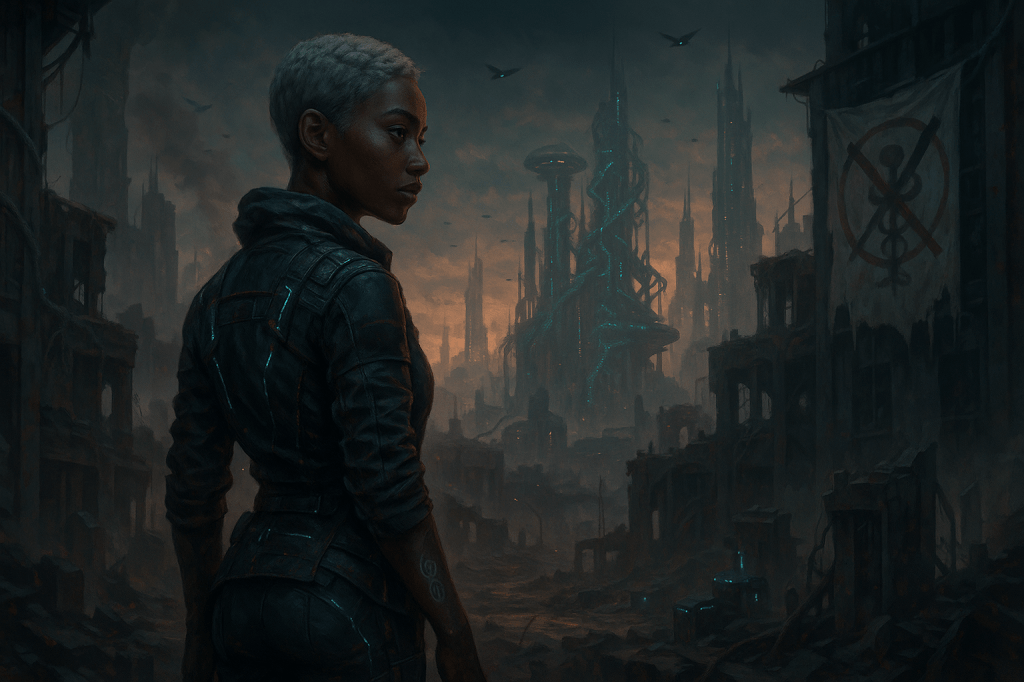
✦ The Post-Type Era
The year is 4041, and chronic conditions like diabetes are a forgotten chapter in human history. Thanks to revolutionary advances in genetic science and nanotechnology, everything has changed. For people like Sienna, it’s hard to even imagine the old world, a world of glucose monitors, insulin injections, or even the once-revolutionary bionic pancreas.
Yet the path to this seamless health utopia was anything but smooth.
✦ The Collapse Before the Cure
For decades, stem cell therapies had held promise. Researchers in China made headlines with procedures that briefly restored insulin production. Hope surged. But within months, most patients relapsed. The regenerated cells were fragile , vulnerable to autoimmune attack and biological fatigue. In some cases, pancreatic function collapsed entirely. And in the most tragic instances, patients developed aggressive cancers of the pancreas and surrounding tissue.
The dream began to unravel. A supposed breakthrough had become a cautionary tale.
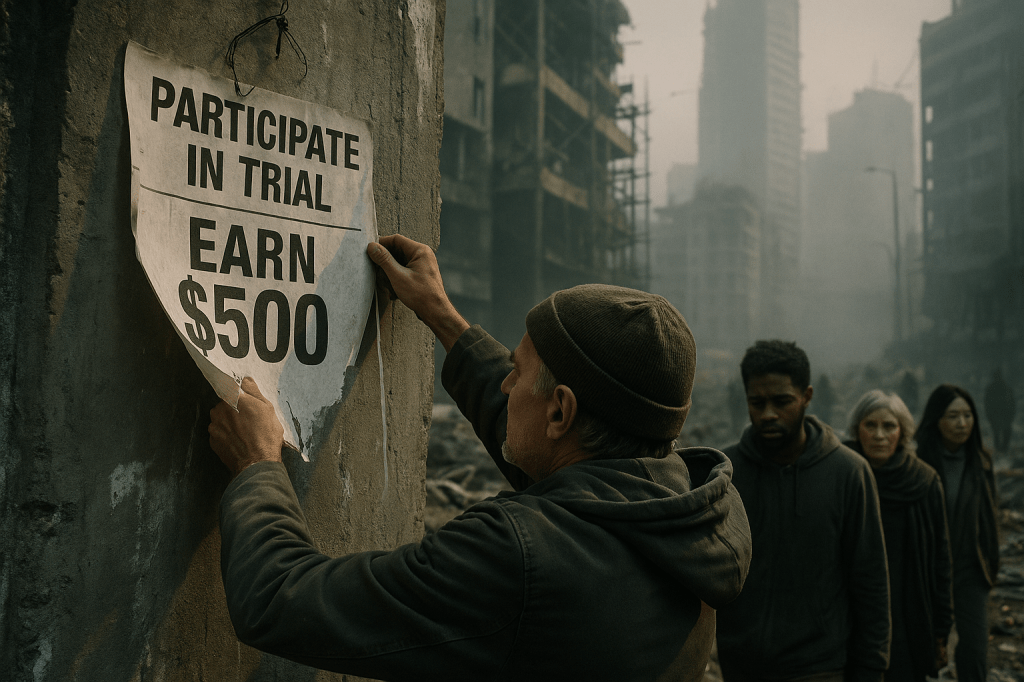
Public trust eroded. Trial participation plummeted. What had once seemed like salvation faded into distant, unreachable myth. Humanity was left not with a cure, but with disillusionment.
✦ The Rise of Auralith-1
Still, necessity is the mother of innovation.
As institutions pulled away, a rogue coalition of scientists, some once part of the failed stem cell initiatives, started looking beyond Earth. Among archived data from the planet’s last deep-space explorations, they unearthed encrypted mission logs referencing an anomalous mineral: Auralith-1.
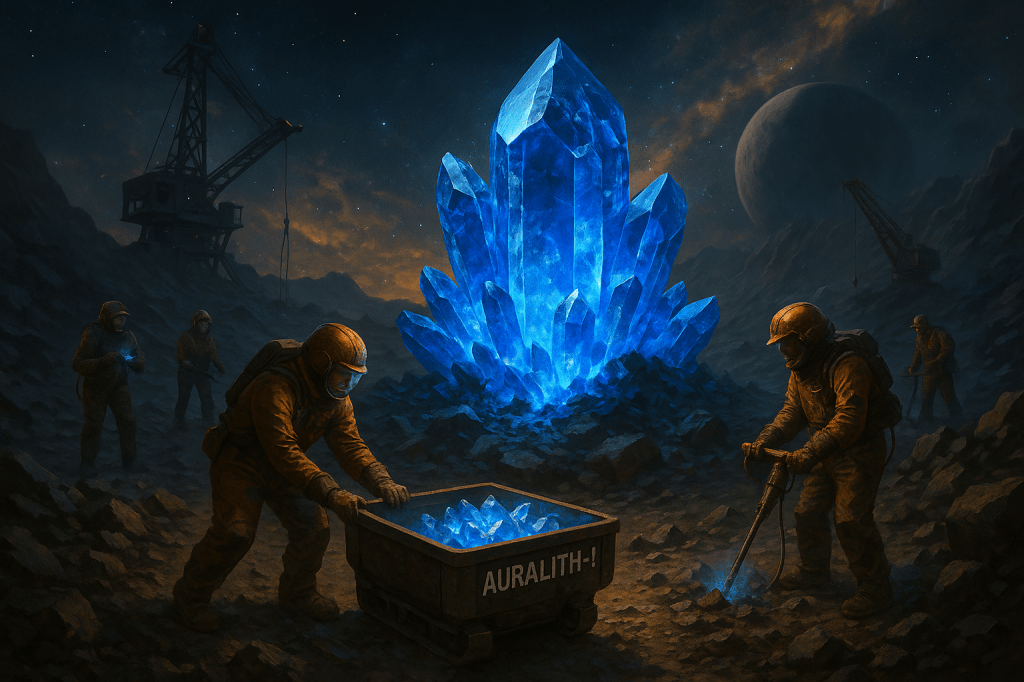
It had been collected from an asteroid beyond Mars and originally shelved. Too unstable. Too volatile. On Earth, it had been dismissed as a geological curiosity. But in updated simulations, Auralith-1 revealed something extraordinary: quantum harmonics capable of stabilising nanobots within biological systems.
Suddenly, it wasn’t just interesting, it was critical.
✦ From Tragedy to Triumph
The first experiments using Auralith-1 moved quickly. Perhaps too quickly.
The urgency to end chronic illness pushed nanobot integration into human trials before it was ready. The result was a global catastrophe. The first-gen bots malfunctioned. They corrupted DNA, misread healthy tissue as hostile, and triggered hybrid syndromes, twisted fusions of old autoimmune diseases with new, unpredictable mutations.
The event became known as the NeuroSync Collapse. Thousands died. Others were left with irreversible neural damage, fragmented cognition, or lifelong instability.
The dream of a cure nearly died a second time.
But the research didn’t stop. It couldn’t.
Eventually, a breakthrough arrived. By salvaging Auralith-1 from the wreckage of the Solace XI colony ship and stabilising it through a decade of relentless trial and error, scientists finally developed nanotechnology that not only integrated with human biology, it rewrote it.
Chronic illness didn’t need to be treated. It could be eliminated.
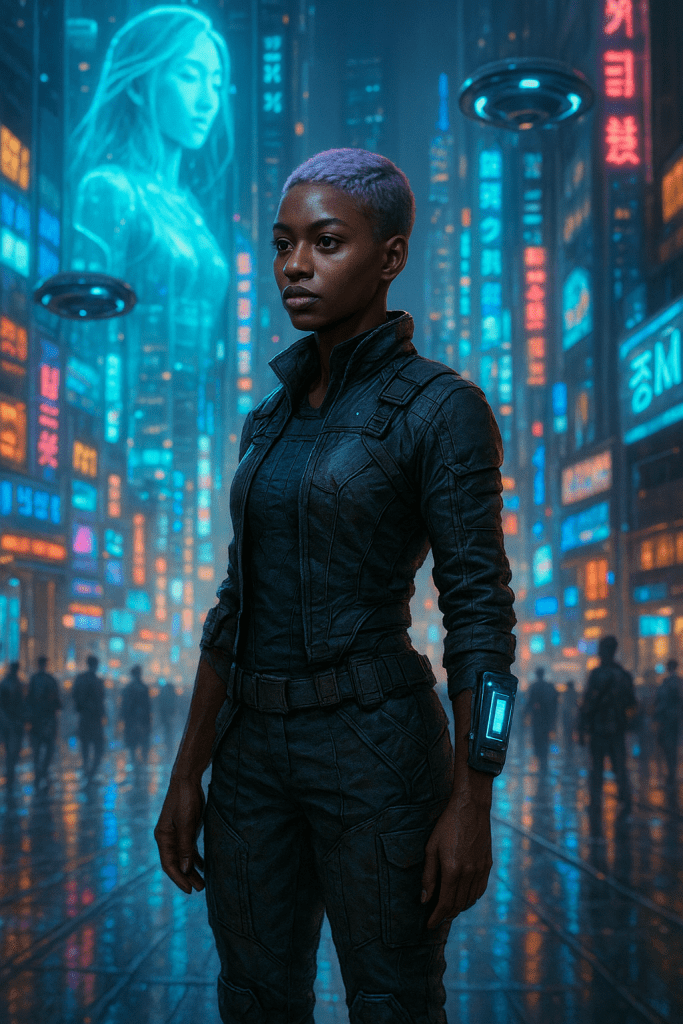
✦ Sienna’s World
Sienna’s generation was the first to be born with it.
From birth, nanobots powered by Auralith-1 coursed through her bloodstream, connected to her neural system via a refined NeuroSync interface. They monitored and modulated everything, immune response, glucose metabolism, tissue regeneration, preventing inflammation and adapting to environmental stressors before symptoms could even arise. All silently. All automatically, constantly keeping the body functioning at its optimal potential.
There were no more glucose spikes or sudden drops. No need for carb counting, food measuring, or pre-meal bolus’ before meals. The constant anxiety of keeping blood glucose levels in check had vanished. People could exercise freely without the risk of dangerous fluctuations. Even hormonal shifts, like those during the menstrual cycle, no longer made the body erratic or insulin-sensitive. The body simply adapted. Silently. Perfectly.
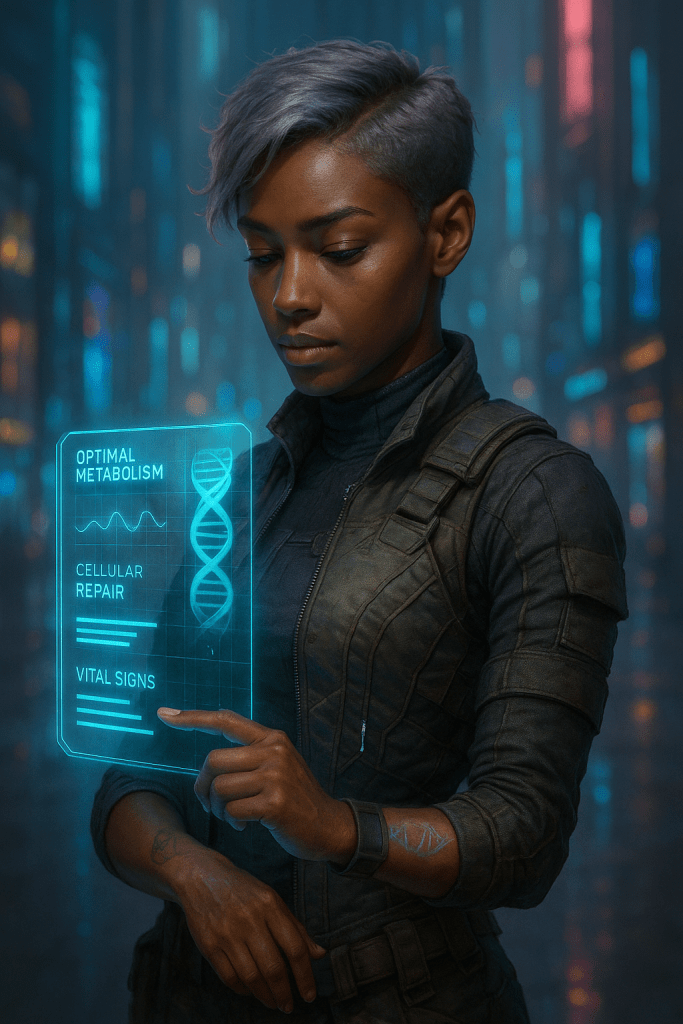
Walking the gleaming streets of New Seoul, past holograms and bioengineered trees, Sienna could flick her wrist and see a translucent projection of her health: perfect glucose levels, optimal metabolism, cellular repair in progress.
Everything her body needed, handled without her ever noticing.
✦ The Personal Cost
Still, Sienna carried echoes of the past.
Her grandmother often spoke of life before the cure, insulin pumps, finger-prick tests, the fear of sleeping through a hypo. She would say: “We lived second by second. You live without even noticing.”
But it was the story of Malo, Sienna’s father, that stayed with her most.
He had been part of the final generation to live with diabetes. A brilliant engineer and fierce advocate, he had relied on an advanced artificial pancreas, a sleek device worn like a second heart. But he believed more was possible. He didn’t want anyone to live in fear, in constant anxiety of managing their condition.
Malo volunteered for the Auralith-1 integration trials.
He didn’t survive them.
The bots failed to stabilise. His body rejected the fusion. His death became a turning point, the last tragedy before the real cure arrived. Without him, the system that would go on to save billions might never have existed.
Now, Sienna carries him with her in every scan, every heartbeat, every moment of invisible stability.
✦ Living Proof
She paused beneath a softly glowing tree, engineered to pulse with bioluminescent life. Children laughed and ran through projected light fields, unaware of the burdens their ancestors had carried. None of them would ever say the words, “I’m diabetic” again.
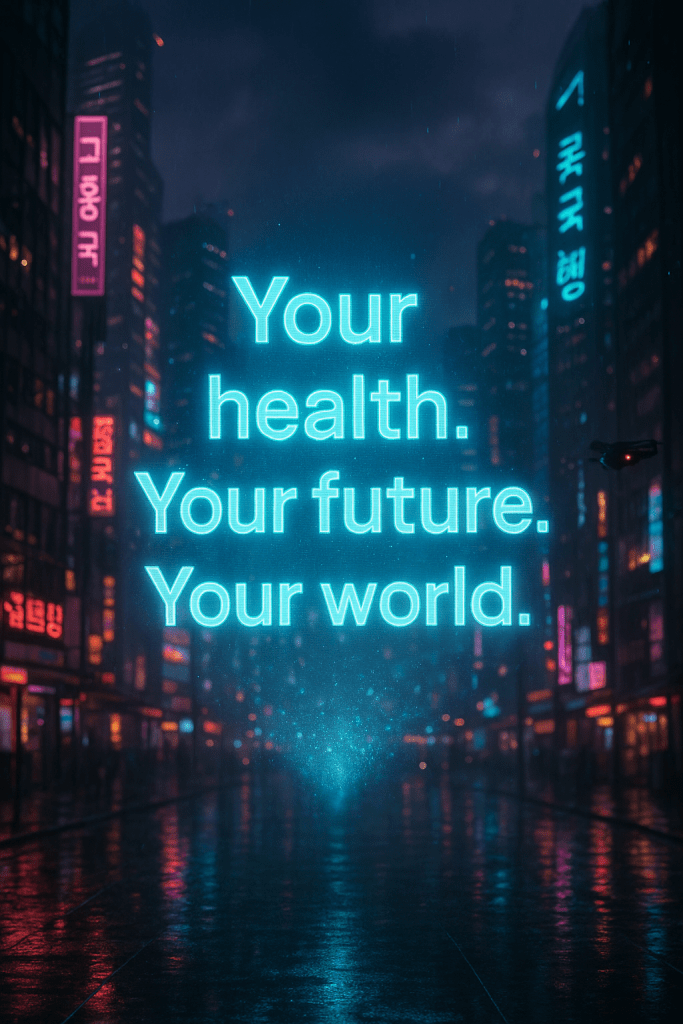
Above her, a holographic banner shimmered into view:
“Your health. Your future. Your world.”
Sienna smiled.
She was living proof of a future once only dreamed.
—————————————————————
I hope you enjoyed my little sci-fi mini story on life without diabetes. Even after living with this condition for 30 years, I still hold on to the hope that one day, we’ll see a future like this. One where a real cure exists, not just management of the condition but a cure that is lasting and effortless. I remain hopeful until that day.
Thanks for stopping by
Amina xxx
© 2025 Sugar High Sugar Low. All rights reserved.
This work is protected under the Copyright, Designs and Patents Act 1988 (UK). No part of this story may be reproduced, distributed, or transmitted in any form or by any means, including photocopying, recording, or other electronic or mechanical methods, without the prior written permission of the author, except in the case of brief quotations used for review or scholarly purposes with proper attribution.

 SUGAR HIGH SUGAR LOW - TYPE 1 D LIFE