

“For months, I thought I had coeliac disease. The bloating, the pain, the unpredictable blood sugar — it ticked all the boxes.”
I blamed it on coeliac disease or lactose intolerance. I cut out gluten. Then dairy. But in the end, it was something far less obvious, and far more powerful: stress.
In my practice, I come across many patients who are managing both Type 1 diabetes and coeliac disease. These two autoimmune conditions can significantly impact someone’s quality of life, both physically and emotionally. While they may seem unrelated at first glance, the connection between them is stronger and more clinically significant than many people may realise.
If you’re living with one or both of these conditions, understanding how they interact can help you manage them more confidently, avoid complications, and protect your long-term health. Additionally, it is equally important for those around you who support you with either condition to have a good understanding of the impact these autoimmune conditions can have on your life.
Coeliac Disease – what is it?
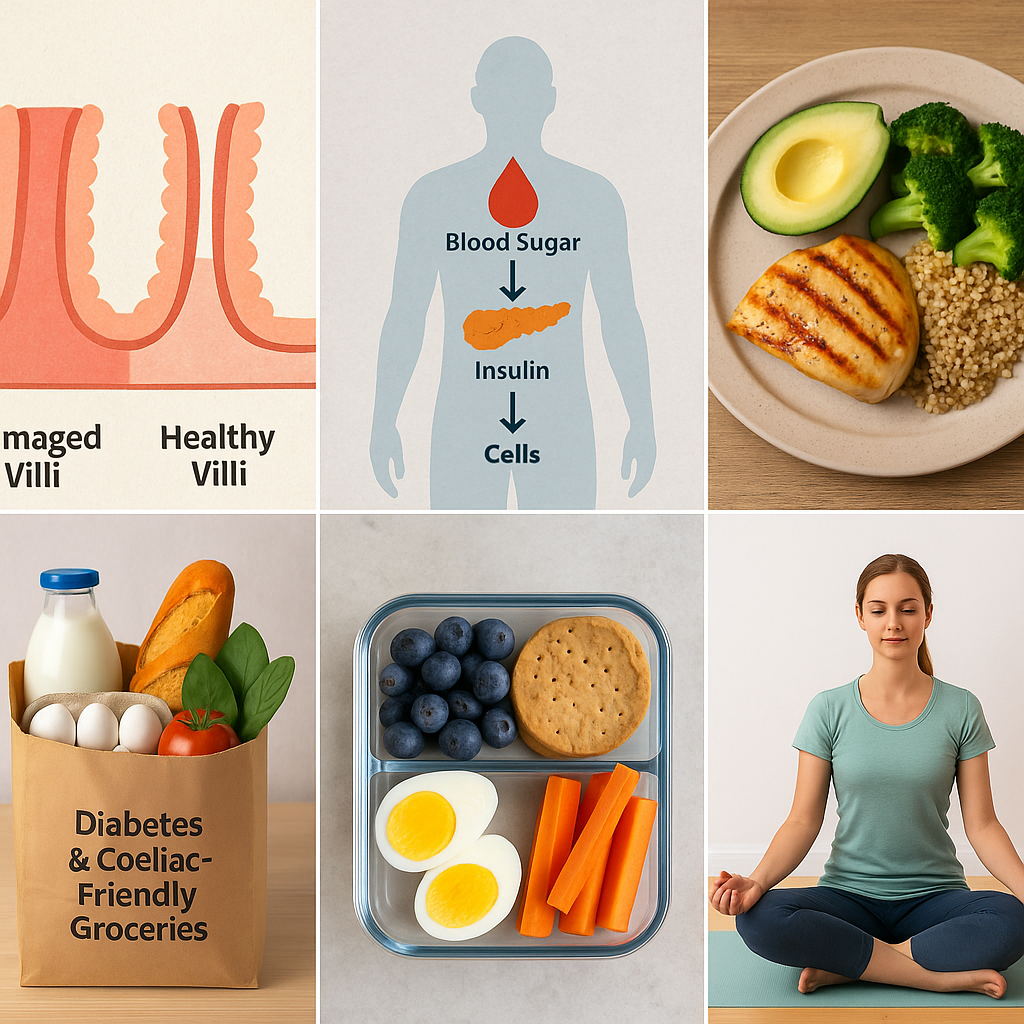
Coeliac disease is an autoimmune condition where the immune system attacks the lining of the small intestine in response to gluten, a protein found in wheat, barley, and rye. Over time, this immune response causes inflammation and damage to the gut lining, impairing nutrient absorption and triggering a range of symptoms.
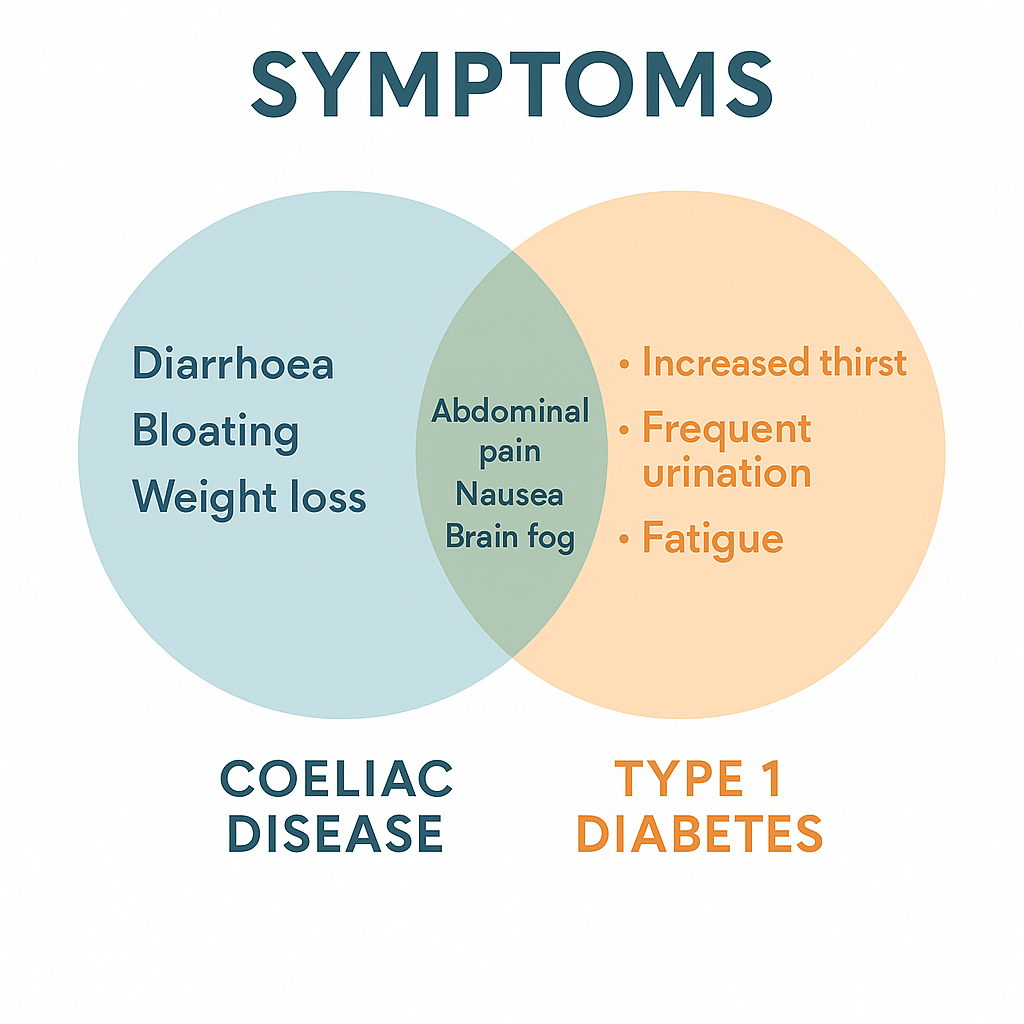
When dealing with patients in my clinic, patients sometimes present with a variety of symptoms, including; bloating or abdominal pain, chronic diarrhoea or constipation, fatigue or brain fog, Blood work can show anaemia(iron deficiency), weight loss, skin rashes (like dermatitis herpetiformis) and even issues with the bones such as osteoporosis (bone thinning).
So how does this relate to diabetes?
Coeliac disease and Type 1 diabetes are both autoimmune diseases, meaning the immune system mistakenly attacks the body’s own tissues.
Here’s what links them:
They share genetic markers, especially HLA-DQ2 and HLA-DQ8. Having one autoimmune disease increases the likelihood of developing another. Around 5–10% of people with Type 1 diabetes also have coeliac disease. Coeliac often develops after a Type 1 diabetes diagnosis, but not always.
What I’ve also found with some of my patients is that some of the presenting symptoms can sometimes overlap. This can sometimes confuse things a little. This is one of the reasons coeliac disease can sometimes go undiagnosed in people with diabetes. This is because the symptoms often overlap, or get misattributed to diabetes itself. But in cases like this, I think it’s important to cover all bases.
What are some of these overlapping symptoms that can sometimes be mistaken for just diabetes
— Unexplained blood sugar fluctuations. – These fluctuations may not be because of “bad diabetes control”, they could be from poor nutrient absorption due to undiagnosed coeliac disease.
—Persistent digestive symptoms might look like diabetic gastroparesis.
—Constant fatigue could be a result of iron or B12 deficiency, not just high/low blood sugars.
My Personal Story: Not Coeliac, Not Dairy, It Was Chronic Stress

Not long ago, I experienced bloating, gut pain, and fluctuating blood sugar levels. I suspected lactose intolerance and so I cut out all dairy. This made no difference to my symptoms, I continued to have symptoms which then pointed my doctor to suspect it could be coeliac disease. I had the necessary blood work done including;
- Tissue Transglutaminase Antibodies ( tT-IgA ) and Total Serum IgA
When these blood tests are being carried out, you must continue to consume gluten for at least 6 weeks before testing to ensure accuracy. After my blood test, I decided to try a period of no gluten to see if this made any difference. However, my results came back negative, which confirmed that I was not suffering from coeliac disease. I had already eliminated the dairy and gluten from my diet, and nothing seemed to help.
Eventually, after some discussion with my doctor, I realised that my symptoms weren’t caused by food at all, they were caused by my environment. I was under daily chronic stress, and my body was in a prolonged state of fight-or-flight. My gut was responding to stress, not gluten or lactose. The day I removed myself from that environment, everything started to settle: the bloating, the stomach pain, and the instability in my blood sugars. I experienced nightly hypoglycaemic attacks daily for years in this environment.
It was a powerful reminder that sometimes, what appears to be a food intolerance could possibly be a nervous system response. This experience changed the way I look at chronic symptoms in my patients, and why it’s important to always consider the full picture: lifestyle, emotions, stress, and support systems.
How Coeliac Disease Affects Diabetes Management
When both conditions coexist, managing blood sugar becomes more complex, but entirely possible with the right support from your healthcare providers.
Malabsorption – Damage to the small intestine can lead to nutrient deficiencies (iron, calcium, B12) and make carbohydrate absorption inconsistent, causing unpredictable blood sugars.
Hypoglycaemia Risk – Low blood sugar episodes may become more frequent if nutrients aren’t being absorbed properly or if dietary fibre intake drops.
Gluten-Free Doesn’t Always Mean Healthy – Many gluten-free packaged foods are high in refined starches and low in fibre, which can spike blood sugars quickly unless balanced with protein and fat.
Managing Both Conditions Effectively
You can live well with both coeliac disease and diabetes. It requires consistency, education, and a willingness to tune into your body and what it needs.
Lifestyle advice I share with my patients: With most chronic conditions
- Focus on natural gluten-free whole foods (quinoa, oats, legumes, veg, fruit, lean meats).
- Balance every meal with protein + fat + fibre to slow blood sugar spikes.
- Always keep safe snacks on hand, especially if you’re prone to hypos.
- Manage stress. It affects digestion, insulin sensitivity, and overall well-being.
- Stay active – do some form of exercise regularly.
Work with a team that understands both conditions, your GP, dietitian, endocrinologist, and mental health support. Involve your family and friends, educate them too and help them understand what works for you.
If you are struggling with your diet whilst managing both autoimmune conditions click here to take a look at the Coeliac UK Live Well with Gluten charity. There you will find ideas on many recipes for breakfast, lunch and dinner.

Living with one autoimmune condition is challenging enough. Managing two, coeliac disease and Type 1 diabetes, requires grace, attention, and support.
But you are not alone in this.
Whether you’re newly diagnosed, still figuring things out, or navigating mysterious symptoms that haven’t quite been explained , you deserve clarity and care.
Trust your body. Question assumptions. And remember: healing involves more than diet, it involves a balance of exercise, rest, boundaries, and support, too.
You’ve got this, and I’m here to help.
Let’s Stay Connected
Follow along on Instagram @SugarHighSugarLow for daily tips, videos, and behind-the-scenes support.
Thanks for stopping by
Amina xxx

 SUGAR HIGH SUGAR LOW - TYPE 1 D LIFE